Flavors of the Steppe: A Wanderer’s Tale from Astana
Ever wondered what it feels like to taste a city’s soul? Wandering through Astana, I didn’t just see skyscrapers and sweeping plazas—I discovered a rich culinary heartbeat beneath the modern surface. From steaming bowls of beshbarmak to sizzling kazy sausage at local markets, every bite told a story of tradition, resilience, and warmth. This isn’t just a capital reinventing itself—it’s a place where ancient nomadic flavors thrive in unexpected corners. Come hungry, and let the city surprise you.
First Impressions: Astana’s Skyline and Hidden Streets
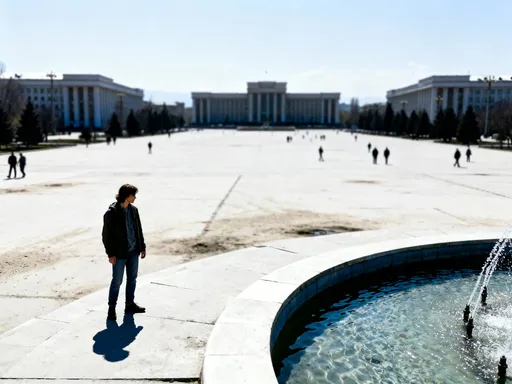
Arriving in Astana, one is immediately struck by its ambition. The skyline unfolds like a vision from the future—glass spires twist toward the sky, monumental arches frame wide boulevards, and the sweeping curves of the Khan Shatyr Entertainment Center resemble a spaceship landed in the steppe. It’s easy to feel dwarfed by the scale, to believe this city was built for spectacle rather than intimacy. But beyond the grandeur lies a quieter rhythm, one best discovered on foot, without a map, guided only by the scent of cumin and wood smoke drifting from open windows.
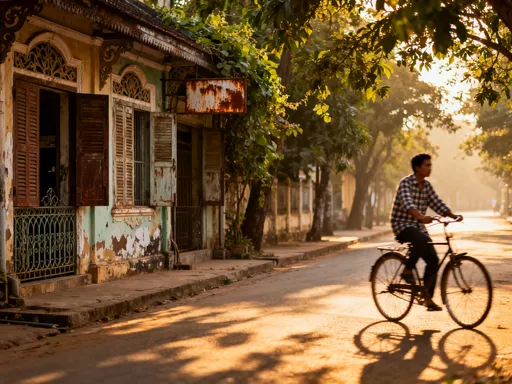
Walking away from the tourist-frequented Bayterek Tower, I turned down a side street where Soviet-era apartment blocks stood shoulder to shoulder, their facades softened by time. Laundry fluttered between balconies, children chased each other past benches where elders sipped tea, and the occasional bark of a dog echoed from a courtyard. It was here, in the residential pockets between the city’s polished arteries, that I first caught the unmistakable aroma of slow-cooked meat. A handwritten sign in Cyrillic pointed toward a small café tucked into the ground floor of an aging building. No English menu, no online reviews—just a woman waving me in with a smile and a nod. This was not a curated experience. It was real.
Astana rewards the curious traveler who resists the urge to stay on the main routes. The city’s most meaningful moments often unfold far from guidebooks—on a cracked sidewalk where an elderly vendor sells homemade kurt from a wooden crate, or in a dimly lit eatery where men in wool hats share stories over bowls of broth. These encounters don’t happen at tourist hours. They require patience, openness, and a willingness to get slightly lost. But in that disorientation, one finds the city’s pulse—steady, unshowy, and deeply human.
The Heart of Kazakh Cuisine: Beshbarmak and Its Meaning
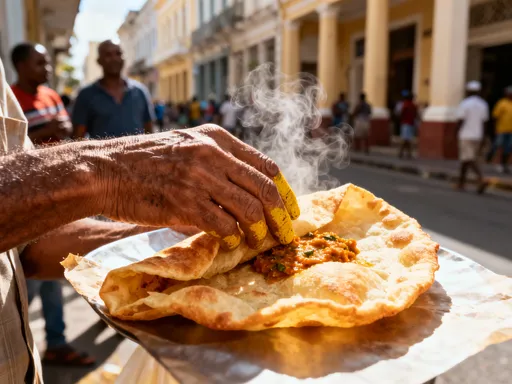
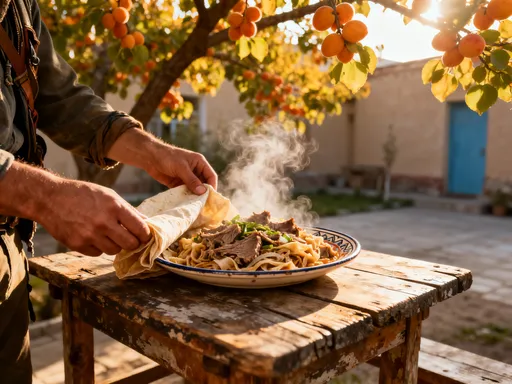
If there is a single dish that captures the essence of Kazakh life, it is beshbarmak. More than a meal, it is an act of communion. Traditionally served on a large communal platter, beshbarmak consists of tender boiled meat—usually lamb or beef—served over wide, hand-rolled noodles and drenched in a savory onion broth. The name itself means 'five fingers,' a nod to the way it is eaten: with the hands, in a gesture of humility and closeness.
I first tasted beshbarmak in a small family-run café on the outskirts of the city, where the owner’s mother prepared it in a kitchen visible through a pass-through window. She moved with quiet precision, her hands shaping the dough with decades of muscle memory. The meat had simmered for hours, its fat rendering into the broth, infusing it with a richness that warmed the bones. When the dish arrived, it was covered with a thin layer of steamed onions, their sharpness mellowed by heat. I followed the lead of the locals—using my fingers to gather a bite, letting the noodles soak up the broth. The flavor was simple, profound: earthy, salty, deeply comforting.
Beshbarmak is not reserved for ordinary days. It is served at weddings, funerals, and seasonal celebrations like Nauryz, the Kazakh New Year. To be offered beshbarmak is to be welcomed into a circle of trust. In a country shaped by centuries of nomadic life, where survival depended on shared resources and mutual care, food has always been a language of belonging. Eating beshbarmak is not just about nourishment—it is a participation in history, a quiet acknowledgment of the values that have sustained families across generations: generosity, resilience, and respect for the land.
Market Wandering: Finding Flavor in Daily Life
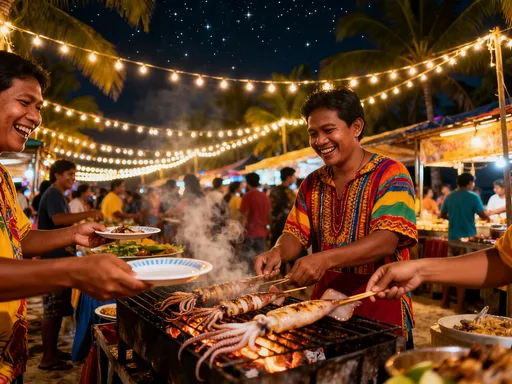
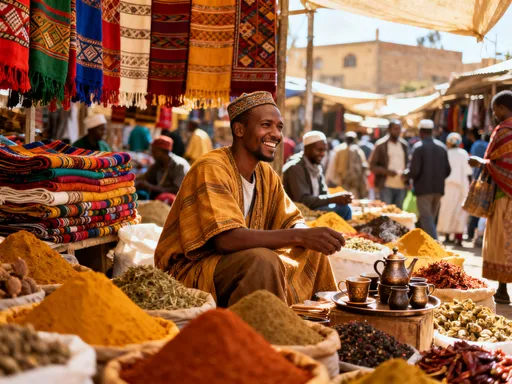
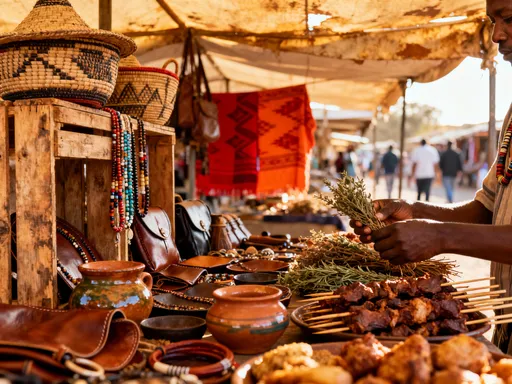
No understanding of Astana’s food culture is complete without a visit to its markets. These are not polished food halls designed for Instagram, but vibrant, unfiltered spaces where the city’s daily rhythms play out in full color. One morning, I wandered into Zhetigen Market, a sprawling complex where sunlight filtered through cracked skylights and the air hummed with conversation in Kazakh, Russian, and Uzbek.
Stalls overflowed with seasonal produce—crisp radishes, deep purple beets, bundles of dill so fresh they still held the morning dew. But it was the dairy and meat sections that drew the most attention. Vendors displayed wheels of qurt, the dried sheep’s milk cheese that can last for months without refrigeration—a relic of nomadic practicality now cherished as a snack. I watched as an elderly woman broke off a piece for a customer, who popped it into his mouth with a satisfied grin. The texture was hard, almost chalky, but the flavor was sharp and salty, lingering on the tongue like a memory of open pastures.
Nearby, a butcher sliced kazy, a traditional horse sausage seasoned with black pepper and cured over weeks. The rich, gamey aroma filled the aisle, drawing curious glances from younger shoppers who may not eat it regularly but still recognize it as part of their heritage. I accepted a small sample on a piece of bread—warm, fatty, deeply spiced. It was not a flavor easily embraced by first-time tasters, but it carried weight, a taste of endurance and tradition.
Perhaps most striking was the presence of ayran, the chilled yogurt drink sold in glass bottles or poured fresh from large jugs. I bought a cup from a vendor who insisted I drink it slowly, not for refreshment alone, but as a gesture of care. As I sipped the tangy, slightly fizzy liquid, I realized that this market was not just a place to buy food—it was a living archive of Kazakh life, where every product, every exchange, carried the imprint of a culture that values self-reliance, seasonality, and community.
From Soviet Echoes to Modern Twists: Soviet-Style Cafés and Fusion Eats
Astana’s culinary landscape is not frozen in time. While traditional dishes remain central, the city’s dining scene reflects layers of history and change. In certain neighborhoods, Soviet-era cafés still operate with little alteration—tiled floors, vinyl booths, and glass cases filled with pastries under plastic domes. These places serve pelmeni (meat dumplings), blinis with sour cream, and borscht, dishes that became staples during the decades of Soviet rule.
I stopped at one such café near the central bus station, where a woman in a starched apron ladled borscht from a steel pot. The soup was deep red, flecked with dill, and served with a thick slab of black bread. It was comfort food in its purest form—warm, hearty, unpretentious. The clientele was equally diverse: delivery workers on break, elderly couples sharing a meal, students flipping through notebooks. This was not nostalgia—it was continuity. These meals, born of scarcity and shared kitchens, remain beloved because they speak to a universal need: to be fed well, simply, and without fuss.
Yet alongside these enduring traditions, a new generation of chefs is reimagining Kazakh cuisine. In a quiet corner of the newer district, I found a small restaurant with a minimalist interior and a menu that blended steppe ingredients with global techniques. I ordered manty—steamed dumplings traditionally filled with lamb and onions—but this version included a hint of gochujang, the Korean fermented chili paste. The result was unexpected: the familiar soft dough giving way to a filling that was rich, spicy, and faintly sweet. It was not a dish my grandmother would recognize, but it felt honest—a reflection of a city that honors its roots while embracing new influences.
This duality defines Astana’s food culture today. It is not a rejection of the past, but an expansion of it. The Soviet-era pelmeni stand alongside fusion manty; homemade kurt shares shelf space with artisanal chocolate. The city does not demand that tradition be preserved in amber. Instead, it allows it to evolve, to breathe, to meet the tastes of a new era—without losing its soul.
Tea, Conversation, and Hospitality: The Ritual of Sharing Food
In Astana, meals are rarely solitary acts. Whether in a bustling market or a quiet home, eating is an occasion for connection. This became clear during an unexpected invitation from a local woman I met while photographing a bakery display. Her name was Aisulu, and after noticing my interest in the golden-brown baursaks (deep-fried dough pieces), she invited me to join her family for tea.
We walked to her apartment in a nearby complex, where her mother and sister were already setting the dastarkhan—a low table spread with a cloth and laden with food. There were bowls of jam, plates of dried fruit, more baursaks, and a steaming samovar. We sat on cushions around the table, and within minutes, my glass was refilled three times. 'Drink, drink,' Aisulu insisted, 'tea is life.' Conversation flowed easily, though my Russian was limited and her English modest. We communicated in gestures, laughter, and the universal language of shared food.
What struck me most was the absence of formality. There was no agenda, no expectation. We were not exchanging business cards or discussing politics. We were simply being together, sustained by warmth and generosity. When I tried to decline a second helping of jam, Aisulu’s mother gently pushed the bowl closer. 'You are our guest,' she said. 'To refuse is to refuse us.' In that moment, I understood that hospitality here is not a performance—it is a moral imperative, a way of affirming dignity and connection in a vast, often harsh landscape.
This ritual of sharing—endless tea, insistent refills, food offered before questions are asked—is woven into the fabric of daily life. It is how trust is built, how strangers become guests, how history is passed down. In a world that often feels fragmented, Astana’s table offers a quiet reminder: we are nourished not just by food, but by the presence of others.
Practical Wandering: How to Explore Like a Local
To truly experience Astana’s food culture, one must move like a local—not as a sightseer ticking off landmarks, but as a wanderer open to surprise. Start early in the morning, when the city is still shaking off sleep and the bakeries are pulling fresh loaves from their ovens. The scent of warm bread, slightly sweet and yeasty, drifts from open doors, drawing in passersby with the promise of a simple, satisfying start to the day.
Wear comfortable shoes. Astana is a city best explored on foot, especially in the residential districts where chain restaurants give way to family-run eateries and street vendors. While the center is walkable, don’t hesitate to use public transit—buses and the metro are efficient and inexpensive—to reach neighborhoods where locals live and eat. Ask for directions with a smile, and if possible, learn a few basic phrases: 'Rakhmet' (thank you in Kazakh), 'Spasibo' (thank you in Russian), 'Namen kuda?' (where to go?). Even imperfect attempts are met with warmth.
Carry cash. Many small vendors, especially in markets, do not accept cards. Having bills in your pocket allows you to sample freely—buy a piece of kazy from an old man at a folding table, share a cup of ayran with a street cleaner, or take home a bag of dried apricots from a woman who has been selling them for thirty years. These small exchanges are the heart of the journey.
Move slowly. Don’t rush from one 'must-see' to the next. Sit in a park and watch families picnic. Follow the sound of sizzling meat. Let a conversation with a vendor turn into an invitation. The best meals in Astana are rarely found by searching—they find you, when you are ready to receive them.
Why Food Tells the True Story of a City
Tourists come to Astana for the architecture—the soaring towers, the futuristic monuments, the bold declarations of progress. But those structures, impressive as they are, tell only part of the story. To know a city fully, one must taste it. Food reveals what buildings cannot: the values of its people, the weight of its history, the quiet persistence of tradition amid change.
In Astana, the survival of beshbarmak, the continued sale of kurt in open markets, the warmth of tea shared with strangers—these are not relics. They are acts of cultural resilience. They say that even as skyscrapers rise and economies shift, certain things remain non-negotiable: family, generosity, the sanctity of the table. These values are not shouted from billboards. They are whispered in the steam rising from a bowl of soup, in the gesture of an extra helping offered without hesitation.
Moreover, the city’s evolving food scene reflects a deeper truth: that identity is not static. Astana is not clinging to the past, nor is it erasing it. It is weaving old and new into something coherent and alive. The Soviet pelmeni, the Kazakh kazy, the Korean-spiced manty—they coexist, not in conflict, but in conversation. This is the mark of a confident culture, one secure enough to absorb influences without losing itself.
For the traveler, this means that the most authentic experiences are not found in curated tours or five-star restaurants alone. They are found in the willingness to wander, to sit, to accept an invitation, to eat with your hands. They are found in the courage to be a guest, to be cared for, to be part of something larger than sightseeing.
Astana’s true flavor is not in its gloss. It is in its warmth. It is in the way a stranger offers you tea, the way a grandmother rolls dough without looking, the way a city remembers who it is, even as it builds what it will become. Come hungry—not just for food, but for connection. Let the flavors of the steppe guide you. And when you leave, you won’t just remember the skyline. You’ll remember the table.