Uluru’s Heartbeat: Where Culture Lives Beyond the Tourist Trail
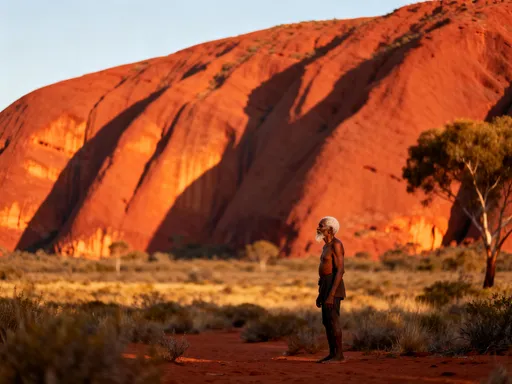
Standing beneath Uluru at sunset, the red rock glows like a living ember, and you feel it—this place has a soul. It’s not just a landmark; it’s a cultural epicenter, shaped by thousands of years of Anangu tradition. Forget typical city districts—here, the land itself forms sacred neighborhoods, each with stories etched in stone and song. I came for the views but stayed for the deeper connection, discovering a world where culture isn’t displayed—it’s lived.
Reimagining “City Districts” in the Outback
In cities, districts are defined by streets, buildings, and zoning laws—areas designated for commerce, residence, or worship. Uluru challenges this human-made logic entirely. Here, the landscape itself is the city, and natural features function as cultural districts. The base of the monolith is not a single destination but a network of spiritually significant zones, each with its own purpose, stories, and protocols. These are not tourist attractions; they are living parts of a cultural map that has guided the Anangu people for millennia.
One of the most powerful ways to understand this system is through the Anangu concept of Tjukurpa, often translated as the Dreaming. But this term only begins to capture its depth. Tjukurpa is law, knowledge, and creation story all at once. It describes how ancestral beings shaped the land, established customs, and laid down the moral and spiritual codes that still govern life today. These ancestral journeys are not myths—they are living truths, and their paths are marked across Uluru’s surface and around its base.
Each section of the rock corresponds to a different ancestral narrative. Some areas are linked to the Mala (Hare Wallaby) people, others to Kuniya (the Woma Python), or Liru (the poisonous snake). These are not just animal symbols; they represent kinship groups, responsibilities, and ceremonial duties. When visitors walk around Uluru, they are moving through a vast, open-air library of cultural knowledge—one that is carefully protected and selectively shared.
The idea of ‘sacred neighborhoods’ becomes tangible when you consider places like Mutitjulu Waterhole or Kantju Gorge. These are not merely scenic stops but spiritually active zones where ceremonies are still held, knowledge is passed down, and the presence of the ancestors is felt most strongly. The Anangu do not separate the spiritual from the physical—they are intertwined. To walk here is to enter a space where every rock, plant, and water source carries meaning.
The Cultural Pulse of the Anangu People
The Anangu are the traditional owners of Uluru-Kata Tjuta National Park, a title recognized not only by their deep ancestral ties but also by Australian law. Their stewardship is not symbolic—it is active, daily, and deeply informed. Since the 1985 handback of the land, when ownership was formally returned to the Anangu people, they have co-managed the park with Parks Australia. This partnership ensures that cultural values guide conservation, tourism, and education.
Visitors often assume that Indigenous cultures belong to the past, but the Anangu are very much present. They work as rangers, guides, artists, and educators. Their voices are central to how the park is interpreted and experienced. At the Uluru Cultural Centre, Anangu staff lead talks, share stories, and answer questions—not as performers, but as knowledge holders. This shift from colonial-era narratives to Indigenous-led storytelling marks a profound transformation in how visitors understand this place.
Their oral traditions are among the oldest continuous cultures on Earth, stretching back over 30,000 years. These stories are not memorized recitations but living transmissions, adapted to context and audience. They explain the origins of Uluru, the behavior of animals, the importance of kinship, and the consequences of breaking cultural law. For the Anangu, knowledge is not stored in books but in memory, land, and ceremony.
Land rights were not granted easily. The struggle for recognition was long and complex, involving legal battles, political advocacy, and cultural resilience. The 1985 handback was a landmark moment—not just for the Anangu, but for Indigenous rights across Australia. It affirmed that connection to country is not a relic but a continuing relationship. Today, the Anangu continue to assert their authority, including the historic 2019 decision to permanently close the climb at Uluru—a move that honored cultural law and prioritized respect over tourism convenience.
The Sacred Geography: Natural Features as Cultural Zones
Uluru is often photographed from a distance, admired for its color and scale. But true understanding comes from walking its base, where the rock reveals its intimate details—caves, carvings, water stains, and ancient rock art. Each of these features belongs to a specific cultural zone, protected and interpreted by the Anangu. These are not random markings; they are part of a sacred geography that maps spiritual knowledge onto the land.
Mutitjulu Waterhole, nestled in a shaded crack at the base of Uluru, is one of the most significant sites. It is a permanent water source in an otherwise arid landscape, and for that reason, it has always been a place of life and gathering. But it is also deeply sacred. The waterhole is associated with the ancestral being Kuniya, the Woma Python, who left her marks here during a creation journey. The rock art nearby depicts her travels and the conflict with Liru, the poisonous snake—a story that teaches lessons about balance, conflict, and protection.
Visitors are welcome to see Mutitjulu, but photography is prohibited. This is not arbitrary—it is a sign of respect. The images are not for public display; they belong to the Anangu and their ceremonial life. The same rule applies to many rock art sites around the base. When elders interpret these paintings, they do so selectively, ensuring that sacred knowledge is not exposed to those unprepared to receive it.
Kantju Gorge, on the western side, is another powerful location. Carved by water over millennia, it opens into a deep, narrow canyon that echoes with silence. This area is linked to fire ceremonies and initiation rites. Even today, it remains a place of cultural activity, not just natural beauty. The Mala Walk, which leads to an ancient ceremonial ground, tells the story of the Hare Wallaby people who once gathered here for ceremony. The path is lined with stone arrangements and subtle markers that only those familiar with Tjukurpa can fully understand.
The atmosphere at these sites is unlike any other. The heat radiates from the rock, the air is still, and there is a sense of being watched—not by people, but by presence. Visitors often describe a feeling of reverence, even if they cannot name why. This is the weight of history, of ongoing tradition, of a culture that does not perform but simply is.
Uluru-Kata Tjuta National Park: More Than One Icon
Many visitors come to see Uluru and leave without realizing that the park encompasses another monumental site: Kata Tjuta, also known as The Olgas. Located about 50 kilometers west, this cluster of 36 domed rocks rises even higher than Uluru and holds equal, if not greater, spiritual significance for the Anangu. Together, Uluru and Kata Tjuta form a dual sacred landscape, each playing a distinct role in Tjukurpa.
Kata Tjuta is associated with the men’s ceremonial life and the powerful ancestral beings known as the Tjukuritja. The area is deeply restricted, and much of its meaning is not shared with outsiders. Unlike Uluru, which has a circular base walk, Kata Tjuta offers two main trails: the Walpa Gorge Walk and the Valley of the Winds. The latter is particularly profound—a 7.4-kilometer loop that takes hikers through narrow passages between towering rock domes, where wind howls and shadows shift unpredictably.
The Valley of the Winds is best experienced at sunrise or sunset, when the light transforms the iron-rich rock into a spectrum of reds, oranges, and purples. But more than its visual beauty, the site offers a sense of solitude and introspection. Fewer visitors come here, and the silence is deeper. For those who walk it with respect, it becomes a journey not just through space, but through time and spirit.
The Anangu view Uluru and Kata Tjuta as complementary forces. If Uluru is often associated with women’s law and stories, Kata Tjuta is more closely tied to men’s business—though both sites involve the full cultural spectrum. The relationship between them mirrors the balance central to Anangu philosophy: between land and people, past and present, public and sacred.
Recognizing Kata Tjuta as part of the same cultural district expands the visitor’s understanding. This is not two attractions, but one interconnected landscape. To see only Uluru is to hear only half the story. Together, they form a complete expression of Anangu cosmology—a map of creation, law, and belonging.
Visitor Centers as Gateways to Understanding
Before walking the land, the best place to begin is the Uluru Cultural Centre. This is not a typical museum with static displays and plaques. It is a living space, designed in collaboration with the Anangu, where culture is shared on their terms. The architecture itself reflects the landscape—curved walls, earth tones, and shaded courtyards that invite quiet reflection.
Inside, visitors encounter interactive exhibits that blend technology with tradition. Touchscreens allow exploration of Tjukurpa stories, while audio stations play Anangu voices speaking in Pitjantjatjara and Yankunytjatjara, the local languages. Displays include tools, art, and ceremonial objects, each accompanied by explanations from Anangu elders. There are no sensationalized dioramas or colonial-era interpretations—just clear, respectful storytelling.
One of the most powerful experiences is attending an Anangu-led talk. These are not performances but conversations. Elders share aspects of their knowledge, answer questions, and sometimes sing traditional songs. These moments create a rare bridge between cultures, allowing visitors to move beyond sightseeing into genuine understanding. Children are encouraged to participate, and many families report that these talks are the most memorable part of their trip.
The centre also plays a vital role in shifting the narrative. For decades, Uluru was presented through a colonial lens—as a geological curiosity or a climbing challenge. Now, the focus is on cultural context. Signs explain why climbing is disrespectful. Exhibits detail the meaning behind rock art. Maps highlight sacred sites that are closed to visitors. This reorientation transforms the visitor experience from one of consumption to one of learning and respect.
For many, the cultural centre is where the journey truly begins. It prepares the mind and heart for what lies outside. It teaches that to walk around Uluru is not to conquer a landmark, but to enter a living culture—one that welcomes curiosity, but demands humility.
Practical Tips for Culturally Conscious Travel
Respecting Uluru is not complicated, but it requires intention. The most important step is to listen—to the land, to the signs, and to the Anangu. This means accepting that some areas are closed, not because they are dangerous, but because they are sacred. Seasonal closures, especially during ceremonies, are common and should be respected without question.
The climbing ban, in effect since October 2019, is a clear example of cultural respect in action. The Anangu have always asked visitors not to climb, not for safety reasons alone, but because the path follows an ancestral creation route. To walk it is to disregard their law. The closure was a victory for cultural integrity, and compliance is now nearly universal. Visitors who once sought the summit now find deeper meaning at ground level.
Dressing modestly near sacred sites is another simple but meaningful gesture. While there is no strict dress code, covering shoulders and knees shows awareness and respect, especially when near ceremonial grounds or when visiting the cultural centre. It is not about rules, but about aligning with the tone of the place—quiet, reverent, and mindful.
Photography should be approached with care. Signs clearly indicate where pictures are not allowed, particularly at rock art sites and waterholes. Even when permitted, it is wise to ask before photographing people. Many Anangu prefer not to be photographed, believing that images can capture part of the spirit. Respecting this belief is a sign of cultural sensitivity.
Guided tours, especially those led by Anangu rangers, are strongly recommended. These walks offer insights that no brochure or app can provide. Guides share stories, point out subtle features, and explain the cultural significance of what you’re seeing. They also ensure that visitors stay on designated paths and avoid restricted areas. Supporting these tours means supporting Aboriginal-owned enterprises and the local economy.
Finally, silence matters. In cities, we fill space with noise. At Uluru, the opposite is true. The quiet allows you to hear the wind, feel the heat, and sense the presence of something greater. In sacred zones, speaking softly—or not at all—is a form of respect. It allows the land to speak in its own way.
Why This Journey Changes You
Travel can be many things: a vacation, an adventure, a checklist of landmarks. But at Uluru, it has the power to be something deeper—an encounter with a worldview that challenges modern assumptions. Here, time is not linear but cyclical. Land is not property but ancestor. Knowledge is not owned but shared. These are not abstract ideas; they are lived realities.
Many visitors arrive expecting a spectacular view and leave with a transformed perspective. They realize that true connection comes not from climbing a rock, but from listening to its stories. They understand that culture is not a performance for tourists, but a way of being. And they carry home not just photos, but a sense of humility and wonder.
This shift—from seeing to understanding, from visiting to respecting—is what makes Uluru unique. It does not offer thrills or convenience. It offers depth. It asks you to slow down, to pay attention, to acknowledge that you are a guest on someone else’s country. And in doing so, it redefines what travel can be.
The heartbeat of Uluru is not in its red stone, but in the enduring culture of the Anangu. To feel it is to recognize that some places are not meant to be conquered, but honored. In a world that often values speed and spectacle, Uluru stands as a quiet reminder: the most meaningful journeys are not about where you go, but how you arrive. Let this place change you. Walk gently. Listen deeply. And let culture live, not as a display, but as a way of life.